
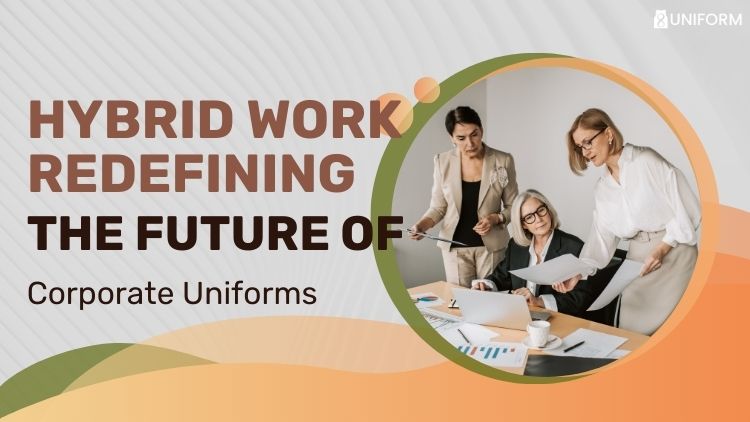
Corporate uniforms are changing in a big way. The shift demands a rethinking of professional dressing, which is not confined to stiff suits for 9-to-5 desk jobs anymore. These days, uniforms have to adapt to the needs of modern workers, offering the desired comfort while working at home, virtual visibility and on-site functionality. Find out how hybrid work is transforming corporate uniforms and paving the future of professional dressing.
At one point of time, wool blazers, suits, starched shirts and mandatory ties symbolized corporate hierarchy. That is not the case anymore. Hybrid schedules expose how impractical it is to stick to rigid formal wear. During home-based workdays, it feels absolutely out of place.
According to retailers, there is a growing demand for wrinkle-resistant polo shirts, stretch fabrics and modular pieces such as detachable colors. As a private label clothing seller, you can thrive if you can provide your customers with hybrid-ready lines such as blazers with athleisure linings or chinos that double as joggers.
According to a recent survey, most companies have relaxed their dress codes. Business casual is the norm today which helps wearers to transition seamlessly from screen to office.
Comfort is the cornerstone of modern uniforms, not a luxury anymore. Workers who log 40% of over their work hours remotely expect their fabrics to move with their body and let their skin breathe, allowing them to feel good all day.
Some of the key features include:
Retailers who partner with performance brands see higher retention rates among corporate buyers. You can also find plenty of private label opportunities and manage to cater to outdoor hybrid team events. In this way, you can position your brand as a strategic partner and not simply a supplier.
Virtual meetings demand “camera-ready” aesthetics. Employers prefer solids over patterns to avoid moiré effects. They also love V-necks for flattering angles, and colors that pop under LED lighting. At the same time, they also look for uniforms that are perfect for in-person handshakes and client lunches.
If you are a retailer, you can focus on camera-tested prototypes such as charcoals and navy blues that enjoy high demand online. Include durable features like machine washable fabrics that dry overnight and reinforced seams that survive long hours of commuting.
During hybrid work, teams are scattered, which dilutes visual cohesion. Strong branding is necessary to maintain unity without overwhelming comfort. This is possible through:
According to data from recent surveys, branded uniforms make workers feel more pride in themselves. It is important for remote workers’ moral boost.
For corporates that are low on funds, multi-functionality can maximize return on investment. It is possible to layer a single vest over T shirts for video calls or wear these inside a jacket for travel purposes.
It can be easy to innovate with:
Eco-conscious buyers love Patagonia-style designs that come from private label sellers. These manage to reduce their wardrobe requirements significantly. If you are a private label seller too, you can offer clothing in similar designs. You can also enjoy higher upsell rates if you bundle these as “hybrid kits” as a retailer.
Workplace diversity demands uniforms that can go beyond one-size-fits-all. Hybrid teams span genders, body types, ages, and abilities. Many workers prioritize inclusive sizing, as per Deloitte.
You would do better to stock extended ranges, such as:
Private label sellers can gain customer loyalty with made-to-measure tech, such as 3D body scanning partnerships.
Sustainability resonates in hybrid eras, where remote workers scrutinize ethics. Durability extends garment life, cutting replacement costs.
Try to focus on:
Highlight the green journey of your materials and you can appeal more easily to eco-conscious consumers, earning their loyalty for your brand.
Hybridism redefines procurement. As a retailer, you should try to integrate artificial intelligence for forecasting trends, such as rising demand for “tech noir” palettes.
Try to collaborate on pilot programs, such as by testing 100-unit runs with feedback loops. When you follow this consultative approach, you can transform one-off sales into multi-year contracts. In this way, you can redefine uniforms as dynamic assets.
As you can see, hybrid work is pushing corporate uniforms towards a future where there is a perfect blend of versatility, comfort, sustainability and tech savvy design. If you are one of the first ones to adapt and offer multi-functional, inclusive lines, you will be among the few retailers or private label uniform suppliers to lead the market.
March 9, 2026
February 24, 2026
January 15, 2026
December 17, 2025
November 17, 2025