
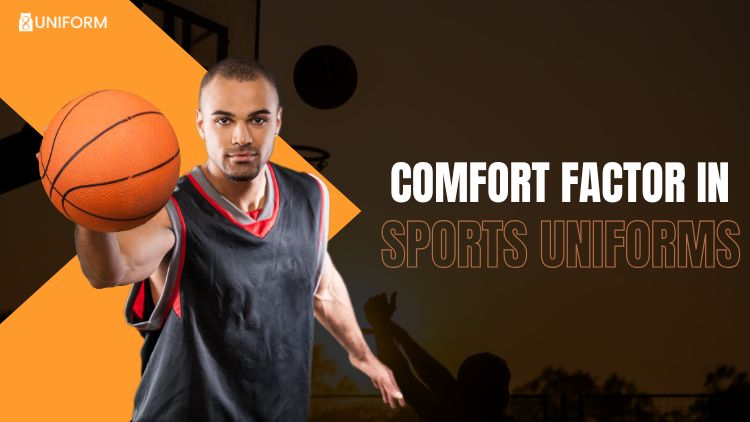
Sports uniforms have always been about performance, team spirit and identity. For many years, the focus was only on designing, branding and durability. Today, however, comfort has become the focus of modern sports apparels. Customers are looking for enhanced comfort, understanding its need for injury prevention and to ensure peak performance. If you are a clothing retailer, you need to understand this shift. With comfort-driven sports uniforms, you can ensure big business for yourself as well as establish customer loyalty for your brand. Find out why you should take note of the enhanced demand for comfort factor in sports uniforms today.
Performance is not only about strategy and skills but also about how much comfortable someone feels while dressed in athletic wear. Uniforms that are restrictive or have poorly designed fabrics can distract focus, reduce mobility and even lead to fatigue. Modern sports uniforms come with features like lightweight materials, ergonomic cuts and four-way stretch fabrics. These let athletes move more comfortably and naturally, allowing better reaction times and agility.
If you can highlight these performance benefits of your sports uniforms, you can appeal to amateur as well as professional athletes alike. You can show to them that you have products that can improve their comfort factor and performance, rather than hinder them.
The use of moisture-wicking fabrics is one of the most significant innovations in sports uniforms. These types of materials manage to pull sweat away from the body. Athletes can feel dry and comfortable, even during intense workout sessions.
Temperature-regulating fibers and breathable mesh panels can improve comfort further, by preventing overheating. The demand for these features is not limited to local clubs, schools or elite teams only. Even community leagues are increasingly looking for uniforms that come with sweat-control technologies.
As a retailer, you can make the most of this growing market by stocking and promoting comfort-oriented, high-performance apparels that can address the universal challenges of athletes. Whether athletes are in indoor courts, under the stadium lights or playing under the sun, they will need your uniforms.
At one time, you could find sports uniforms made only in standard sizes, with the least amount of attention to fit. These days, players are looking for uniforms that consider body diversity as well, taking into account different body shapes, sizes and gender requirements.
As a retailer, you should try to align with brands that make ergonomic tailoring and inclusive-sizing, two of the main priorities today. You can get a competitive edge by working with them. You will not just be recognized as a seller of uniforms but also as a symbol of confidence and empowerment. You will be noted as a brand that unites athletes with a sense of belonging.
The line between casual wear and sports uniforms is getting blurred every day, thanks to the athleisure movement that is gaining more and more traction. Today, customers expect to carry over the comfort in their sports apparels into their daily lives. Fans, players and even fitness enthusiasts look for apparels that they can wear on the field as well as off it.
These days, sports uniforms manufacturers are including stylish cuts as well as elements like seamless stitching and soft fabrics that look good even outside the field. Due to this crossover, you can market your sports uniforms not only as performance wear but also as lifestyle apparels.
When you focus on improving the comfort aspect, you can open up new revenue channels. Your sports uniforms can work also as fan wear, training gear or even as casual clothing. With this versatility, your comfort-centric sports uniforms can be regarded as an investment rather than a one-time-use expense.
Today, comfort in sports uniforms is not only about having it easy on the body but also feeling psychologically great. Athletes often perform with hesitation when they feel uncomfortable or restricted in their sports gear. On the other hand, they can have more focus and greater confidence when they wear uniforms that are designed for improved comfort.
There is great psychological boost. It is often that teams invest heavily in training and coaching. Wearing the right uniform, however, can be a silent yet powerful contributor to mental preparation. As a retailer, if you can educate your shoppers about the association between confidence and comfort, you can position your sports uniforms better. It can be a great way to establish credibility. You can emerge as an authority brand in the sportswear market.
There is a global boom for the sports apparel industry. This growth is largely being driven by the need for more comfort. Market research shows that individual players as well as teams are increasingly prioritizing comfort-focused designs over traditional, heavy fabrics.
For you, as a retailer, this signals a wonderful market opportunity. There is a rapid shift in demand, whether for schools upgrading team kits or individual athletes looking for training apparels or professional leagues in search of performance-boosting gear.
If you ignore the need for better comfort, you could end up losing customers to competing brands that are more comfort-focused. As a smart retailer, you need to adapt early and curate comfort-enhanced sports uniforms that can satisfy your customers’ expectations as well as surpass them. When that happens, you can enjoy long-term loyalty and repeat sales.
Look deep down and you can easily understand why the need for comfort in sports uniforms is not an afterthought anymore; it is the central element that is shaping modern sportswear fashion. Comfort is defining the way athletes experience their uniforms – whether it comes to inclusivity, performance enhancement, market demand or sustainability.
This spells a golden opportunity for clothing retailers like you. If you are able to recognize and prioritize comfort in an astute way, you can meet evolving expectations of modern shoppers and manage to carve out a profitable niche for your brand in an ever-expanding market.
November 17, 2025

October 17, 2025
September 1, 2025
August 12, 2025
July 25, 2025